

Cargo Training Simulator: Measurable Safety, Time, and Cost Benefits
Cargo handling is one of the highest-risk areas within ground operations. Load integrity, correct ULD positioning, centre-of-gravity awareness, and coordination between ramp teams directly affect aircraft safety, dispatch reliability, and compliance exposure.
The cargo simulator module supports these operations through procedural training that reflects real ramp conditions rather than idealised workflows.
Cargo Operations as a Safety-Critical Activity
A significant proportion of aviation safety events occur during aircraft turnaround. Cargo-related deviations typically result from the interaction of time pressure, equipment congestion, communication breakdowns, and incomplete procedural adherence.
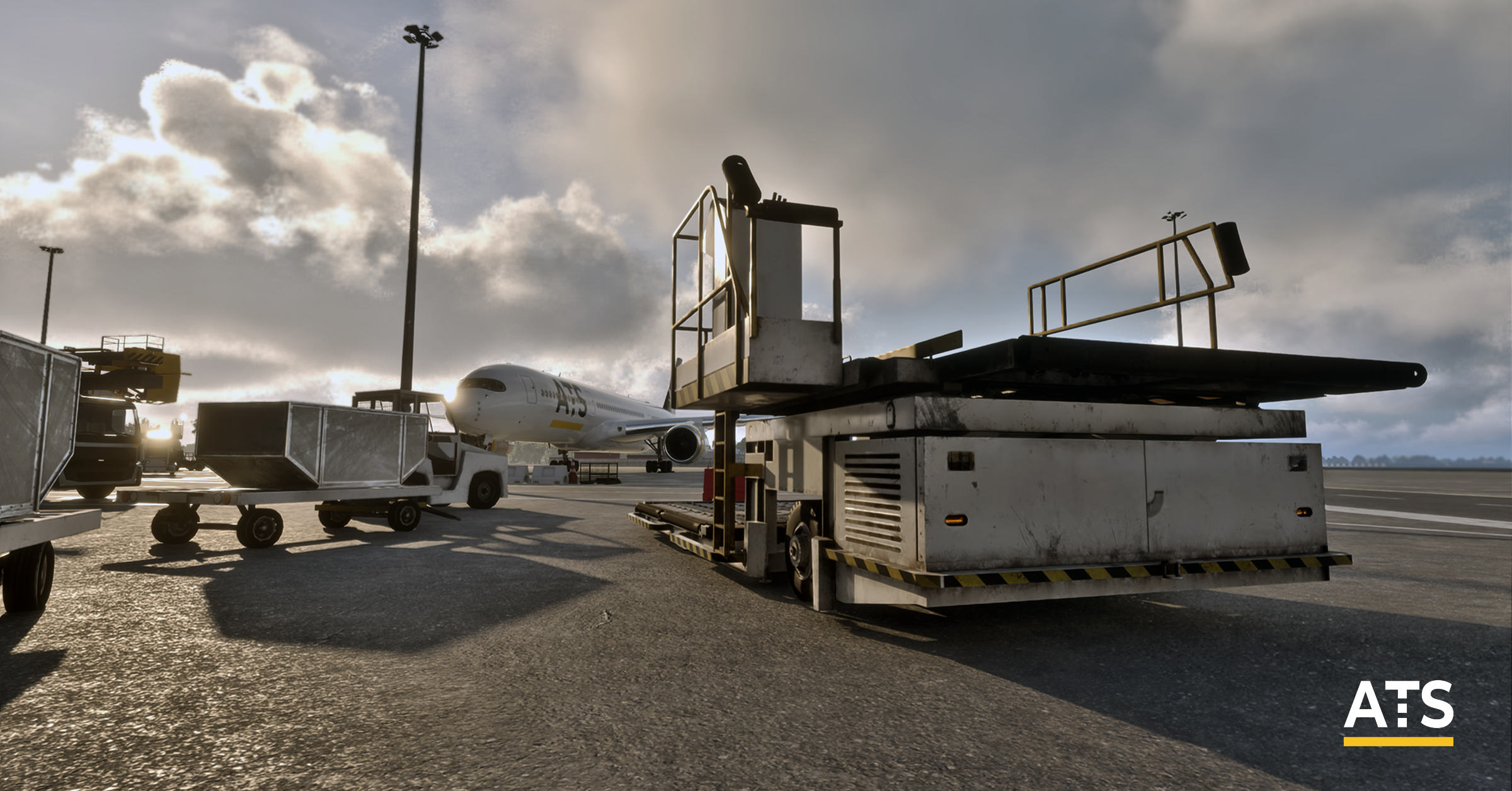
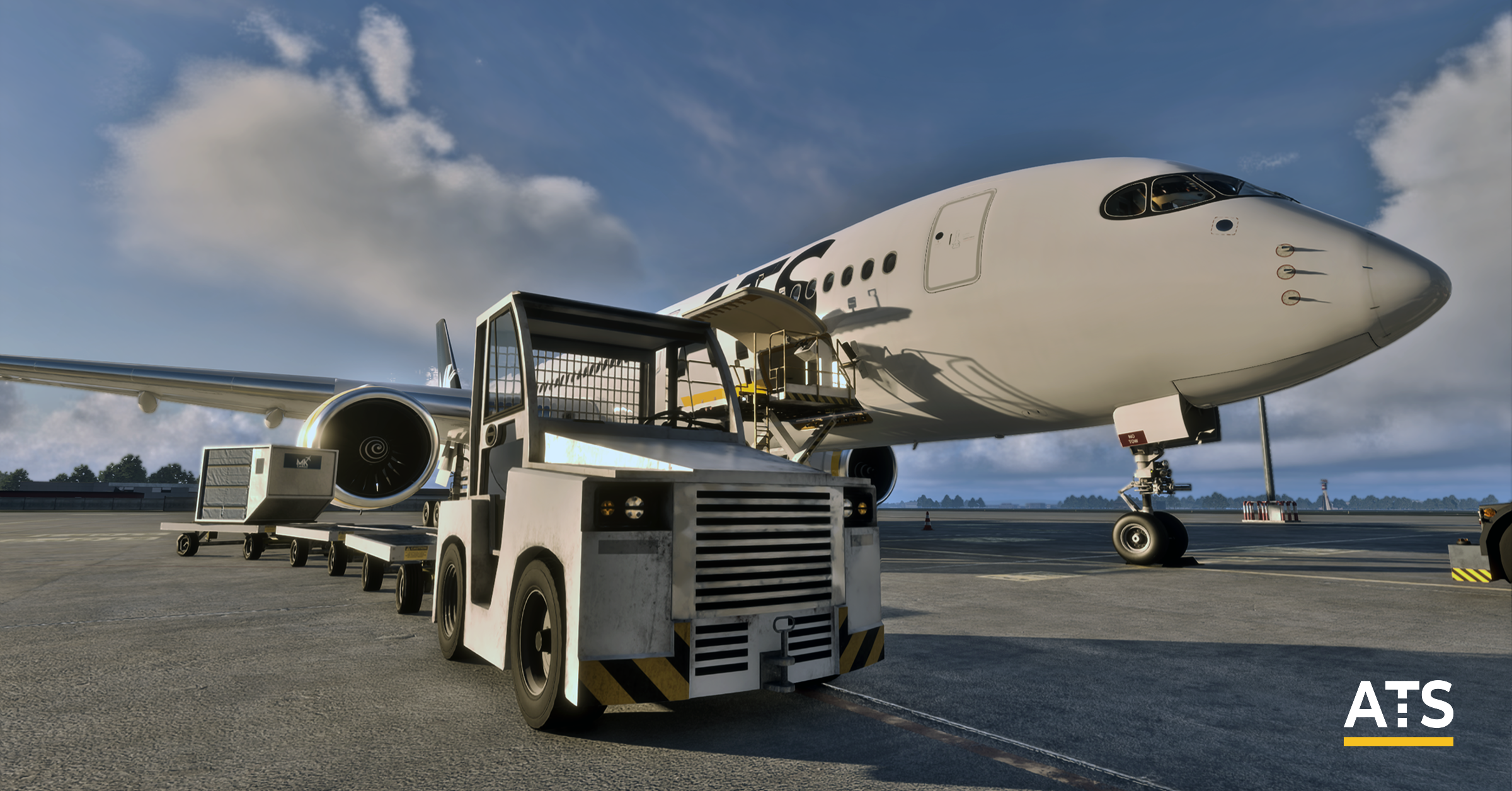
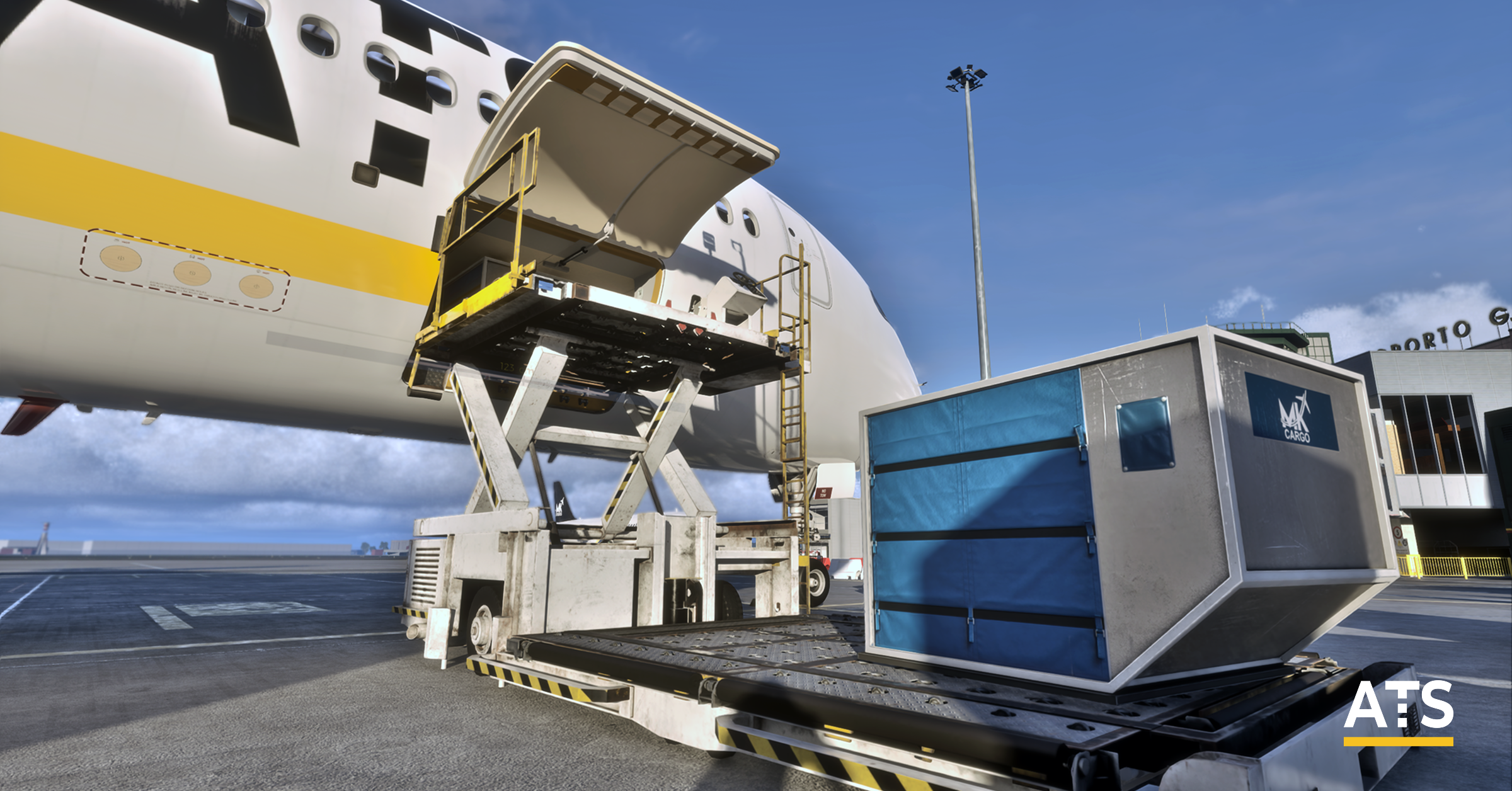
The cargo module replicates core ramp and cargo processes, including:
ULD build-up and positioning,
load distribution logic and CG awareness,
coordination with load control,
interaction with other ground support equipment movements.
Abnormal and degraded scenarios are embedded as part of standard training rather than treated as exceptional cases.
Safety impact
The primary safety value lies in repeated exposure to operational situations that cannot be safely or systematically trained during live operations, such as:
late load changes affecting centre of gravity,
incorrect restraint configuration,
conflicting ramp traffic under turnaround pressure.
Incident Reduction and Operational Risk
Cargo-related ground events do not need to be severe to have a material operational impact. Even minor deviations may escalate into:
aircraft-on-ground situations,
network delays,
regulatory findings,
insurance consequences.
Simulation-supported training targets the operational drivers behind these events, in particular:
inconsistent procedural execution,
reduced situational awareness during peak turnaround,
limited exposure to non-nominal cargo scenarios,
variability in training standards across shifts or stations.
When integrated into initial qualification and recurrent training, simulation supports standardised execution and reduces reliance on informal, experience-based learning alone.
Training Time and Operational Readiness
Conventional cargo training is typically based on classroom instruction supplemented by supervised exposure during live ramp operations. While compliant with regulatory requirements, this model limits systematic training of non-nominal scenarios and may extend the time required to achieve consistent independent task performance.
Evidence from simulation-supported training programmes in safety-critical operational environments indicates a material reduction in time to operational readiness, commonly reported in the range of 30-50%, when compared with traditional classroom and on-the-job training alone.
Within the cargo module, trainees are exposed to defined operational scenarios aligned with approved procedures, including degraded and abnormal conditions. This supports:
earlier consolidation of procedural competence,
reduced dependency on live aircraft availability,
more consistent performance across shifts and operational contexts.
Cost and Operational Impact
From an operational perspective, the value of the cargo module is realised primarily through disruption avoidance rather than abstract efficiency gains.
Preventing even a limited number of cargo-related ground events can offset the cost of the simulator, given the financial impact of aircraft damage, AOG recovery, and schedule instability. In parallel, shorter training cycles reduce indirect training costs and limit operational interference during peak periods.
Illustrative scenario
annual cargo-related ground events: 4
average cost per event: USD 200,000
conservative reduction through simulation: 50%
Estimated avoided cost: USD 400,000 per year
Under these conditions, break-even can be achieved within the first year of operation.
Strategic Value for Ground Handling Organisations
Beyond immediate incident reduction, the cargo simulator module supports:
procedural standardisation across stations and shifts,
consistent competency levels within ramp teams,
scalability during traffic growth without proportional risk increase,
alignment with Safety Management System (SMS) principles and audit expectations.
Simulation complements live ramp experience by providing structured, repeatable exposure to operational risk and reinforcing correct execution under realistic operational constraints.
Conclusion
Cargo handling combines high operational tempo with low tolerance for error. The cargo simulator module provides a controlled environment to train critical ramp and cargo procedures, reduce operational deviations, shorten time to readiness, and limit the cost impact of avoidable incidents.
For ground handling organisations, simulation represents a practical tool to stabilise operations, support safety objectives, and reduce reliance on reactive corrective measures.
