

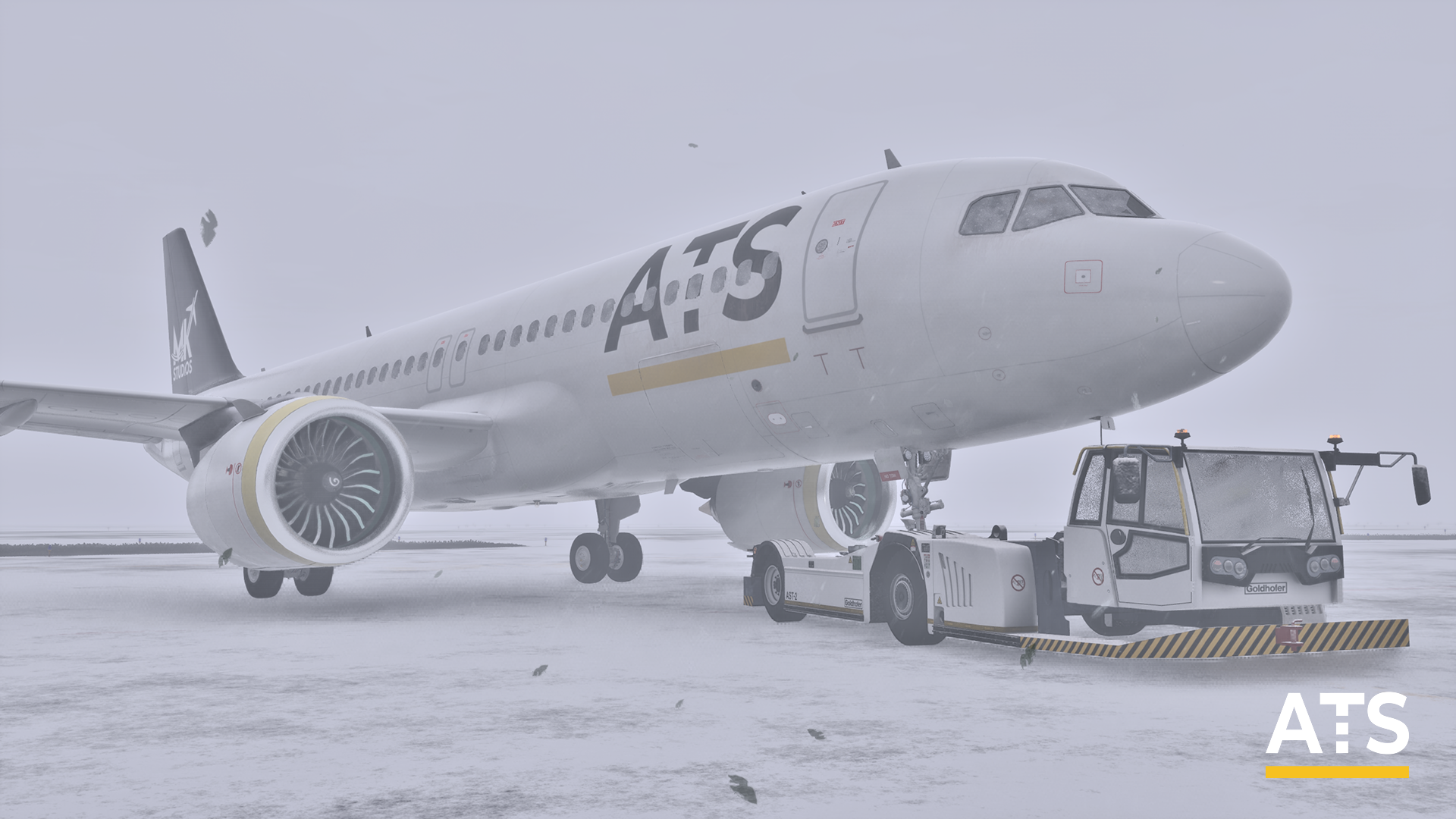
While airports across Northern Europe and North America are preparing for freezing temperatures, snow and icy aprons, ground handling teams in Australia are heading into summer. Meanwhile, airports in the Middle East are entering one of their busiest travel seasons, with more comfortable temperatures attracting visitors from around the world.
Different regions, different seasons, but one thing remains the same: ground handling operations must continue safely, regardless of the weather. Today, we're focusing on the challenges winter brings to airport ground operations. Snow-covered aprons, icy surfaces, freezing temperatures and reduced visibility can turn even routine tasks into serious safety challenges.
So, how does winter weather affect everyday airport operations, and what can ground handling teams do to prepare?
Pushback and Towing: When Traction Becomes a Safety Risk
Pushback and towing require precision under normal conditions. Add snow or ice, and even a routine maneuver can become significantly more challenging. On January 16, 2024, at New Chitose Airport in Japan, a Korean Air Airbus A330 collided with a parked Cathay Pacific aircraft during pushback. According to Korean Air, the ground handling vehicle slipped due to heavy snow, causing the aircraft's wing to strike the tail of the nearby aircraft. Fortunately, none of the 289 people on board were injured, but both aircraft sustained damage.
The incident highlights how quickly a routine operation can become hazardous when traction is compromised. For ground handling teams, winter operations require particular attention to apron conditions, vehicle traction, maneuvering speed and communication with the flight crew. Recognizing unsafe conditions and knowing when to stop an operation can be just as important as performing it correctly.
Airside Driving and Ground Handling: Familiar Tasks, Different Risks
Winter conditions affect far more than pushback operations. From driving GSE around the apron to loading baggage, positioning passenger stairs and handling cargo, everyday tasks become more demanding. Snow can obscure ground markings, ice increases braking distances, and reduced visibility makes maneuvering around aircraft more difficult. Freezing temperatures may also affect hydraulic systems and equipment performance.
For ground handling personnel, slippery surfaces increase the risk of falls and injuries, while thick gloves and protective winter clothing can limit movement and dexterity. The consequences extend beyond personal safety. According to IATA, ground damage costs the aviation industry billions of dollars annually, with cargo loaders, passenger stairs and boarding bridges involved in a significant share of incidents. With multiple teams working simultaneously around aircraft, maintaining safe distances, clear communication and proper equipment positioning becomes even more important during winter.
De-icing: When Every Minute Matters
De-icing is one of the most critical winter airport operations. Before departure, aircraft must be free of contamination that could affect aerodynamic performance, making proper de-icing and anti-icing procedures essential for flight safety.
One important consideration is holdover time (HOT), the estimated period during which anti-icing fluid provides protection against frost, ice and snow accumulation. It varies depending on fluid type, temperature and precipitation conditions, and does not guarantee continued protection. During heavy snowfall, aircraft may queue for de-icing while departure schedules become increasingly difficult to maintain. However, rushing the process or compromising required inspections can introduce serious safety risks. Effective communication, accurate fluid application and adherence to procedures remain essential, regardless of operational pressure.
Practice Before the Weather Arrives
Winter-related risks are nothing new. Yet despite established safety procedures and years of operational experience, similar challenges return every season. Knowing the procedures is essential, but responding correctly when a vehicle loses traction, visibility suddenly drops or equipment behaves unexpectedly requires practical experience. The challenge is that recreating dangerous conditions during real airport operations is neither practical nor safe.
This is where simulation-based training can make a difference. Airport Training Simulator (ATS), developed by MK Studios, allows ground handling teams to practice operations in a controlled virtual environment. Dynamic weather conditions let instructors introduce snow, rain, reduced visibility and other operational challenges without putting people, aircraft or equipment at risk.
From pushback and towing to airside driving, cargo loading, walkaround inspections and de-icing, trainees can experience how changing conditions affect their work. Instructors can repeat challenging scenarios, assess responses and help operators build confidence before facing similar situations on a real apron.
Winter Is Predictable. Being Prepared Makes the Difference.
Winter returns every year, bringing familiar challenges to airport operations. While we cannot control the weather, we can control how well our teams are prepared. Investing in practical training and encouraging safety-first decisions helps protect equipment, reduce operational risks and, most importantly, keep people safe.
Because when winter arrives, preparation should never be left until the first snowfall.
